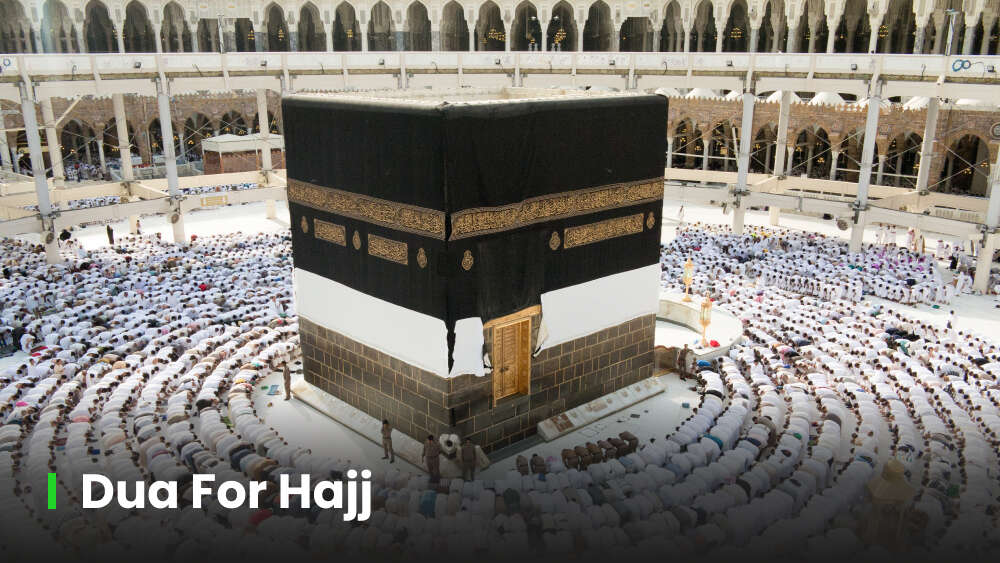
Imagine finally standing before the Ka‘bah after years of hoping and making dua. The moment you prayed for has arrived. But one question comes to mind: What should I ask Allah for during Hajj or Umrah?
Knowing the authentic duas for Hajj and Umrah can help you feel more prepared and focused throughout your journey. From entering Ihram and reciting the Talbiyah to Tawaf and Sa‘i, the Quran and Sunnah guide us on what to recite.
In this guide, you’ll find essential Hajj and Umrah duas and adhkar, along with when and where to recite them.
Why Are Duas Important During Hajj and Umrah?
Dua is the heart of worship. The Prophet Muhammad ﷺ said, “Dua is worship.” Every dua you make in Makkah and Madinah is a chance to turn to Allah and ask for His mercy, forgiveness, and guidance.
Making dua is one of the most meaningful acts of worship throughout the pilgrimage, especially while performing the rites of Hajj, from Tawaf and Sa‘i to standing at Arafah.
1. It Invites Allah to Accept Your Worship
Hajj and Umrah are journeys of worship, repentance, and nearness to Allah. The Prophet ﷺ taught its virtue:
Abu Hurairah (R) narrated that Allah’s Messanger ﷺ said:
الْحَاجُّ وَالْعُمَّارُ وَفْدُ اللَّهِ إِنْ دَعَوْهُ أجابَهمْ وإِنِ استَغفروهُ غَفرَ لهمْ
Meaning: “Those who perform the hajj and those who perform the ‘umrah are people who have come to visit Allah. If they supplicate Him, He will respond to them, and if they ask Him for forgiveness, He will forgive them.” [Mishkat al Masabih: 2536]
The holy sites are among the most blessed places on earth, and Duas made there are especially hoped to be accepted.
2. It Deepens Your Bond with Allah
Dua turns ritual into relationship. As you perform each rite, you can speak to Allah directly, asking for forgiveness, guidance, protection, and success in this life and the next. This personal conversation is what makes the journey unforgettable.
3. It Keeps Your Intention Pure
Setting a clear Niyyah before Umrah reminds you that you have come only for Allah’s pleasure. When your heart matches your words, every step of Tawaf and Sa’i becomes true devotion rather than routine.
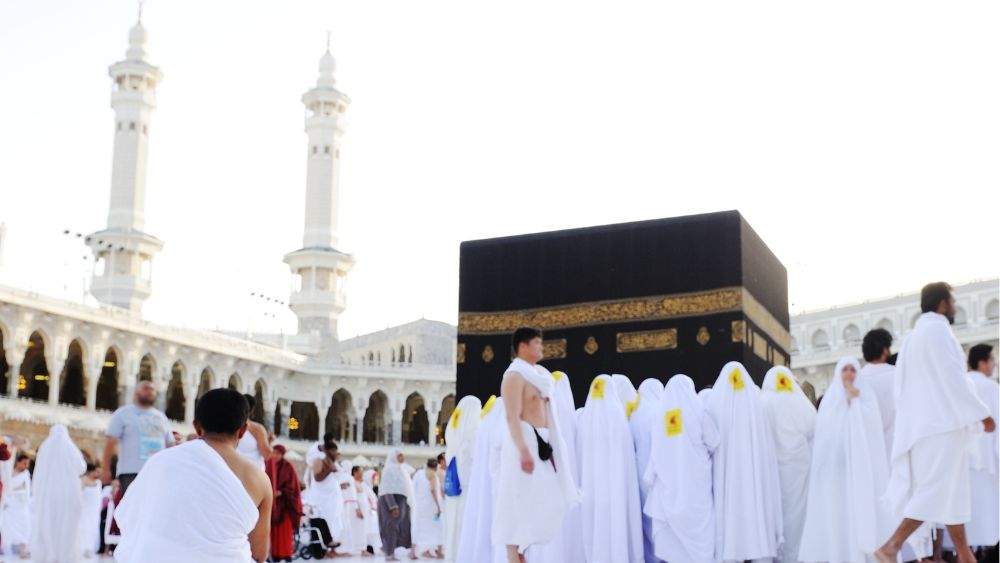
4. It Connects You to the Wider Ummah
When you pray for your parents, your family, the sick, and the whole Muslim community, a personal journey becomes an act of shared mercy. Many pilgrims carry a written list of names so they never forget anyone who asked, “Please make dua for me.”
5. It Brings Peace in Mind
Travel tires the body and crowds test the heart. Turning to Allah for ease, safety, and acceptance fills every moment with calm and gratitude. A rewarding pilgrimage is one where the tongue stays moist with the remembrance of Allah.
6. Seek Allah’s Forgiveness and Reward
Hajj and Umrah are opportunities to draw closer to Allah through dua, dhikr, and istighfar. Pilgrims can turn to Allah throughout their journey, especially at virtuous times and places.
The Day of Arafah is especially significant. The Prophet ﷺ said, “The best supplication is the supplication on the Day of Arafah.” It is a precious time to make dua, seek forgiveness, and remember Allah.
List of Duas for Hajj and Umrah in Arabic and English
1. Dua for Hajj/Umrah Travelling
Say three times:
اَللّٰهُ أَكْبَرُ
Transliteration: Allaahu ‘Akbar
Meaning: “Allah is the Most Great.”
..and then say:
سُبْحَانَ الَّذِيْ سَخَّرَ لَنَا هٰذَا وَمَا كُنَّا لَهُ مُقْرِنِيْنَ، وَإِنَّا إِلَى رَبِّنَا لَمُنْقَلِبُوْنَ
Transliteration: Subḥāna alladhī sakhkhara lanā hādhā wa mā kunnā lahu muqrinīn, wa innā ilā rabbinā lamunqalibūn.
Meaning: “Glory is to Him Who has provided this for us though we could never have had it by our efforts. Surely, unto our Lord we are returning.” [Hisnul Muslim 207]
For more travel duas, check out this article. You can also use the Sadiq App for daily duas, prayer times, the Quran, Islamic reminders, and more. It can be a helpful companion throughout your sacred journey, inshaAllah.
2. Dua at the Miqat
It is Sunnah to recite Tasbih, Tahlil, and Takbeer before entering into Ihram for Hajj or Umrah.
سُبْحَانَ اللّٰهِ ، لَا إِلٰهَ إِلَّا اللّٰهُ ، اَللّٰهُ أَكْبَرُ
Transliteration: Subhanallahi, la ilaha illallahu, Allahu Akbar.
Meaning: “Glory be to Allah, there is no god but Allah, Allah is Most Great.” [Sahih Bukhari]
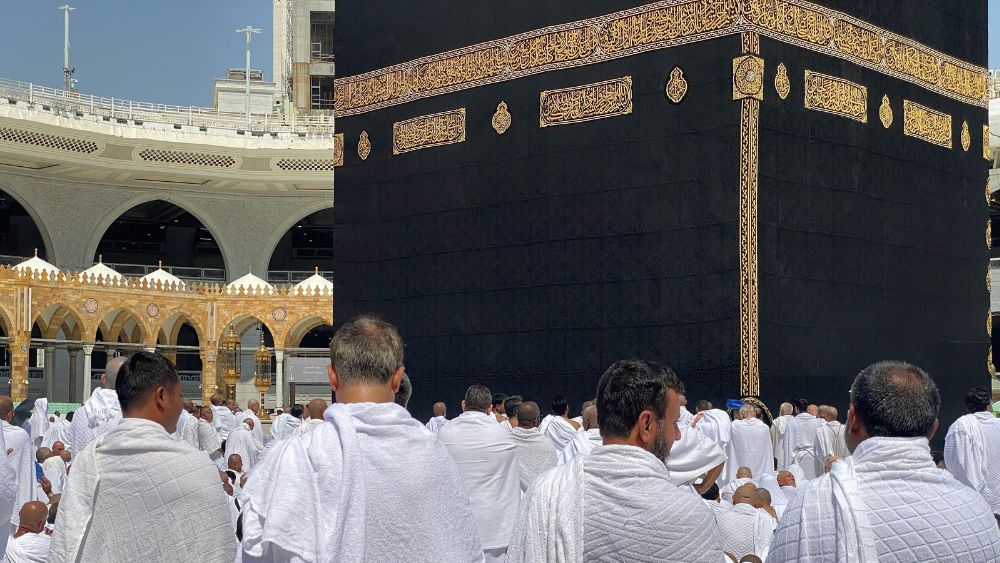
3. Talbiyah of Hajj and Umrah
لَبَّيْكَ اَللّٰهُمَّ لَبَّيْكَ، لَبَّيْكَ لَا شَرِيْكَ لَكَ لَبَّيْكَ، إِنَّ الْحَمْدَ، وَالنِّعْمَةَ، لَكَ وَالْمُلْكَ، لَا شَرِيْكَ لَكَ
Transliteration: Labbayk Allahumma labbayk. Labbayka la sharika laka labbayk. Innal-hamda wan-ni’mata laka wal-mulk. La sharika lak.
Meaning: At Your service, Allah, at Your service. At Your service, You have no partner, at Your service. Truly all praise, favour and sovereignty is Yours. You have no partner. [Sahih Al-Bukhari, Sahih Muslim]
4. Saying Takbir When Passing the Black Stone
The Prophet ﷺ circled the Ka’bah on a camel. Every time he reached the black stone, he would point to it with something (his staff) and say:
اَللّٰهُ أَكْبَرُ
Transliteration: Allaahu ‘Akbar
Meaning: “Allah is the Most Great.”
[Sahih Al-Bukhari, Fathul Bari]
5. Dua to Say Between Yemeni Corner and Black Stone [Ka’bah]
رَبَّـنَا آتِنَا فِي الدُّنْيَا حَسَنَةً وَفِي الآخِرَةِ حَسَنَةً وَقِنَا عَذَابَ النَّارِ
Transliteration: Rabbana atina fid-dunya hasanatan wa fil-akhirati hasanatan wa qina ‘adhaban-nar.
Meaning: “Our Lord! Grant us the good of this world and the Hereafter, and protect us from the torment of the Fire.”
[Sahih Al-Bukhari, Fathul Bari, Sahih Muslim]
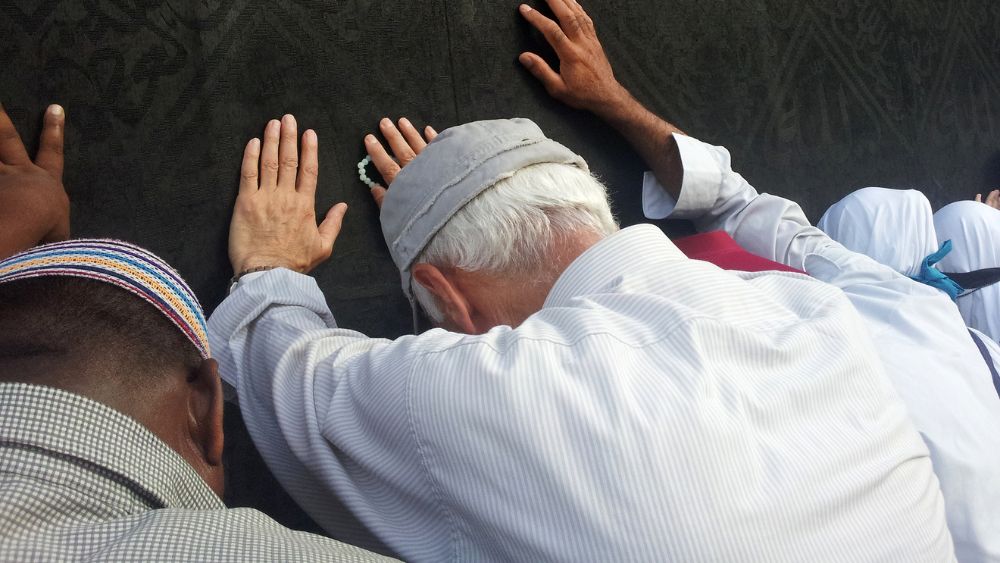
6. Dua to Say During Tawaf
According to IslamQA, there is no authentic report from the Prophet ﷺ specifying particular duas or adhkar for Tawaf. You may make any sincere dua or recite any dhikr you wish while performing Tawaf.
7. Dua at Mount Safa and Mount Marwah
Jabir (R) said when describing the Prophet’s ﷺ pilgrimage:
i) When he approached the mount as-Safaa he would recite
إِنَّ الصَّفَا وَالْمَرْوَةَ مِنْ شَعَائِرِ اللَّهِ
Transliteration: Inna assafaa walmarwata min shaa’a’iri Allahi
Meaning: Indeed, as-Safa and al-Marwah are among the symbols of Allah.
ii) Then say:
أَبْدَأُ بِمَا بَدَأَ اللَّهُ بِهِ
Transliteration: Abda’u bimaa bada’allaaahu bihi.
Meaning: I begin by that which Allah began.
iii) He ﷺ started with as-Safaa and climbed it until he could see the Ka’bah, he then faced it and said:
لَا إِلٰهَ إِلَّا اللَّهُ وَحْدَهُ لَا شَرِيكَ لَهُ، لَهُ الْمُلْكُ وَلَهُ الْحَمْدُ وَهُوَ عَلَىٰ كُلِّ شَيْءٍ قَدِيرٌ، لَا إِلٰهَ إِلَّا اللَّهُ وَحْدَهُ، أَنْجَزَ وَعْدَهُ، وَنَصَرَ عَبْدَهُ، وَهَزَمَ الْأَحْزَابَ وَحْدَهُ.
Transliteration: Laa ‘ilaaha ‘illallaahu wahdahu laa shareeka lahu, lahul-mulku wa lahul-hamdu wa Huwa ‘alaa kulli shay’in Qadeer, laa ‘ilaaha ‘illallaahu wahdahu, ‘anjaza wa’dahu, wa nasara ‘abdahu, wa hazamal-ahzaaba wahdahu.
Meaning: None has the right to be worshipped but Allah alone, Who has no partner. His is the dominion and His is the praise, and He is Able to do all things. None has the right to be worshipped but Allah alone. He fulfilled His Promise, aided His slave, and He alone defeated the Confederates.
Then he would ask Allah for what he liked, repeating the same thing like this three times. He did at Mount Maewah as he did at Mount Safa. [Jami at-Tirmidhi, Abu Dawud, Musnad Ahmad]
8. Dua to Say at Mash’ar al-Haram i.e. at Muzdalifa (Only for Hajj)
Jaabir (R) said: “He ﷺ rode al-Qaswaa (his camel) until he reached al-Mash’ar al-Haraam, he then faced the Qiblah, supplicated to Allah,
اَللّٰهُ أَكْبَرُ
Transliteration: Allāhu Akbar
Meaning: “Allah is the Most Great.”
and extolled His greatness
لَا إِلٰهَ إِلَّا اللّٰهُ
Transliteration: Lā ilāha illallāh
Meaning: “None has the right to be worshipped but Allah alone”
and oneness.
اَللّٰهُ اَحَدٌ
Transliteration: Allāhu Aḥadun
Meaning: “Allah is the one”
He stood until the sun shone but left before it rose.
[Hisnul Muslim: 120]
9. Dua at Arafah (Only for Hajj)
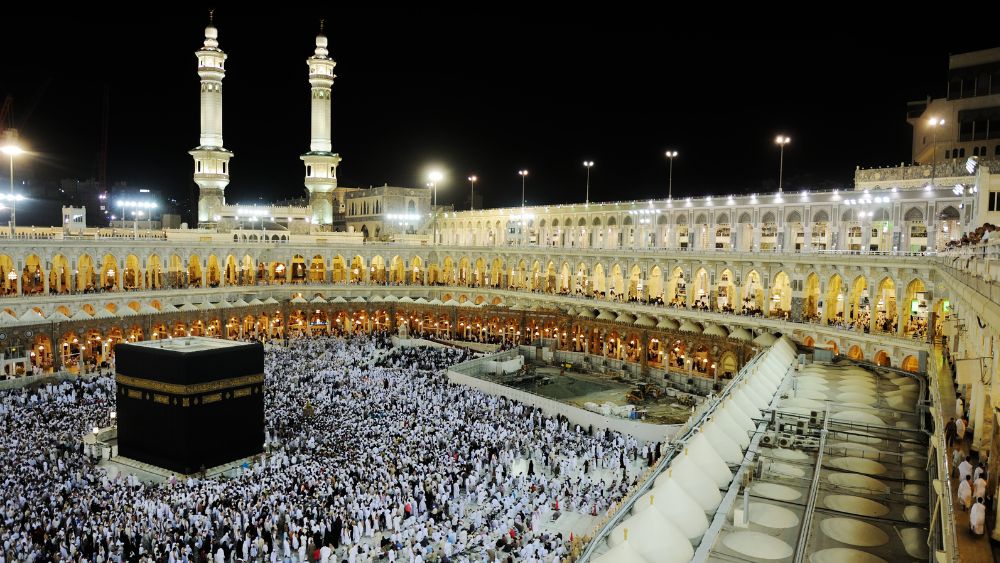
The Messenger of Allah ﷺ said: “The best of supplications is the supplication on the day of ‘Arafah and the best which I and the Prophets before me have said is:
لَا إِلٰهَ إِلَّا اللّٰهُ وَحْدَهُ لَا شَرِيْكَ لَهُ، لَهُ الْمُلْكُ وَلَهُ الْحَمْدُ وَهُوَ عَلَی كُلِّ شَيْءٍ قَدِيْرٌ
Transliteration: Lā ilāha illallāhu waḥdahu lā sharīka lah, lahul-mulku wa lahul-ḥamdu wa huwa ‘alā kulli shay’in qadīr.
Meaning: “None has the right to be worshipped but Allah alone, Who has no partner. His is the dominion and His is the praise, and He is Able to do all things.” [Hisnul Muslim: 119]
10. When Throwing Pebbles at Jamraat (Only for Hajj)
Say:
اَللّٰهُ أَكْبَرُ
Transliteration: Allāhu Akbar
Meaning: “Allah is the most great” [Hisnul Muslim: 121]
11. Saying Labbaik at Dhul Hulaifah (Only for Hajj)
Umar (R) narrated:
رَأَيْتُ رَسُولَ اللَّهِ صلى الله عليه وسلم يَرْكَبُ رَاحِلَتَهُ بِذِي الْحُلَيْفَةِ ثُمَّ يُهِلُّ حَتَّى تَسْتَوِيَ بِهِ قَائِمَةً
Transliteration: Ra’aytu Rasūlallāhi ﷺ yarkabu rāḥilatahu bi-Dhil-Ḥulayfati thumma yuhillu ḥattā tastawiya bihi qā’imatan.
Meaning: “I saw that Allah’s Messenger ﷺ used to ride on his Mount at Dhul Hulaifa and used to start saying, “Labbaik” when the Mount stood upright.” [Sahih al Bukhari: 1514]
12. Takbeer-E-Tashreek (Only for Hajj Times)
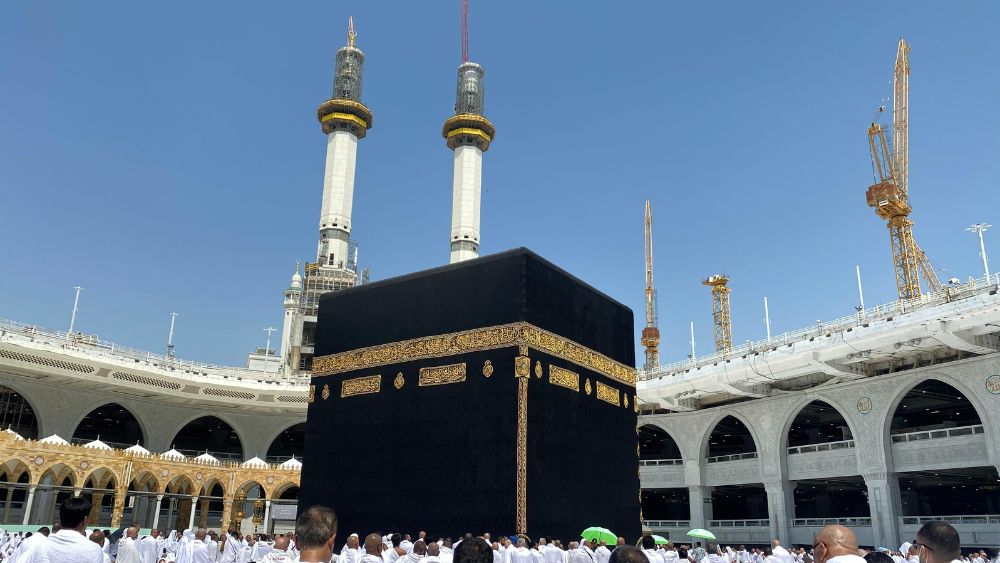
Say this Takbeer after every Fard Salah from Fajr of 9th of Dhul Hijjah to Asr of 13th of Dhul Hijjah. Men should pronounce Takbeer loudly and women softly after each obligatory prayer.
اللَّهُ أَكْبَرُ اللَّهُ أَكْبَرُ لَا إلَهَ إلَّا اللَّهُ وَاَللَّهُ أَكْبَرُ اللَّهُ أَكْبَرُ وَلِلَّهِ الْحَمْد
Transliteration: Allāhu akbar, Allāhu akbar, lā ilāha illallāhu, wallāhu akbar. Allāhu akbar, wa lillāhil-ḥamd.
Meaning: “Allah is the greatest, Allah is the greatest. There is no deity besides Allah and Allah is the greatest. Allah is the greatest and all praises are for Allah only.”
13. Dua During Drinking Zamzam Water
اللَّهُمَّ إِنِّي أَسْأَلُكَ عِلْمًا نَافِعًا، وَرِزْقًا طَيِّبًا، وَعَمَلًا مُتَقَبَّلًا
Transliteration: Allahumma inni as’aluka ‘ilman nafi‘an, wa rizqan tayyiban, wa ‘amalan mutaqabbalan.
Meaning: “O Allah! I ask you for beneficial knowledge, and pure sustenance, and accepted actions”. [Sunan Ibn Majah]
14. Dua When Slaughtering Animal (Only for Hajj)
بِسْمِ اللّٰهِ وَاللّٰهُ أَكْبَرُ [اَللّٰهُمَّ مِنْكَ وَلَكَ] اَللّٰهُمَّ تَقَبَّلْ مِنِّيْ
Transliteration: Bismillāhi wallāhu akbar. [Allāhumma minka wa laka.] Allāhumma taqabbal minnī.
Meaning: “With the Name of Allah, Allah is the Most Great! [O Allah, from You and to You.] O Allah, accept it from me.” [Hisnul Muslim: 127]
15. Dua for Return from Hajj, Umrah
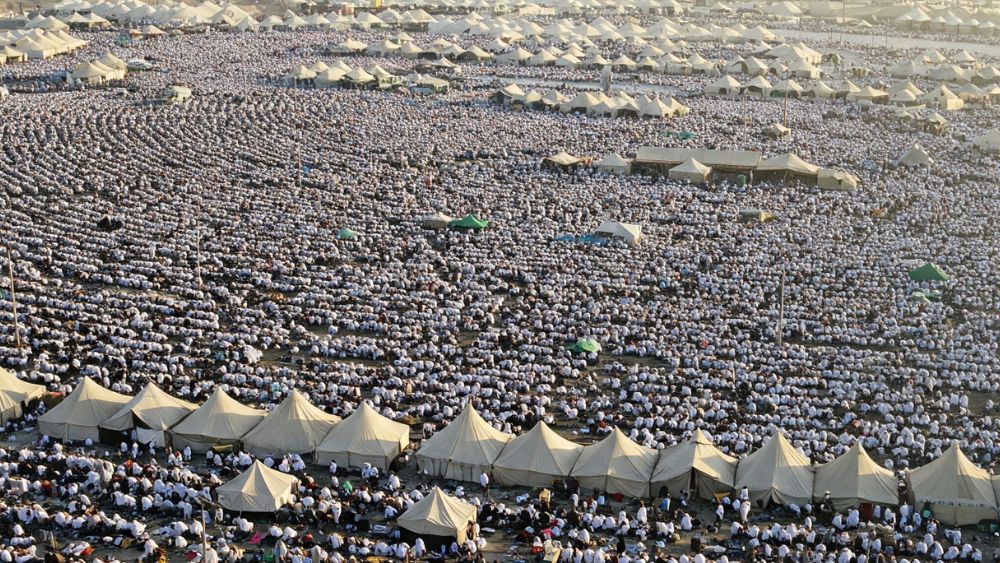
When returning from Hajj and other journeys, say this dua:
آيِبُونَ تَائِبُونَ عَابِدُونَ لِرَبِّنَا حَامِدُونَ
Transliteration: Ayibuna ta’ibuna ‘abiduna lirabbina hamidun.
Meaning: “We return, repentant, worshipping, prostrating and praising our Lord.”
Frequenly Asked Questions
What is the best app for learning hajj and Umrah duas?
If you are preparing for Hajj or Umrah, the Sadiq App is a useful option for learning and memorising duas. It provides authentic duas with Arabic text, transliteration, translations, and audio, making it easier to read, understand, and practise them before and during your journey.
What should I say to someone going for Hajj?
There is no specific dua. You can simply say: May Allah accept your Hajj, forgive your sins, make your journey easy, and bring you home safely. Please remember me in your duas.
A sincere dua is more important than finding a complicated or specially designed message.
What is the best dua for Hajj and Umrah acceptance?
There is no specific Sunnah dua that guarantees the acceptance of Hajj or Umrah. You can sincerely ask Allah to accept your worship and efforts. A simple dua is: Allāhumma taqabbal minnī (O Allah, accept from me.).
You can also ask Allah to accept your Hajj or Umrah, forgive your shortcomings, and bring you closer to Him.
What is the dua for Hajj and Umrah Niyyah?
Your intention is primarily in your heart. You should know that you are entering Ihram to perform Umrah for the sake of Allah. There is no need to invent or believe in a compulsory fixed sentence for the intention.
The Talbiyah, “Labbayk Allahumma labbayk,” is authentically established in the Sunnah.
Conclusion
Performing Hajj in the House of Allah is a great honour for any Muslim. Making abundant du’a during Hajj increases the chances of your Hajj being accepted and helps ensure it is performed according to the Sunnah.
That’s why every Hujjaj (pilgrim) should learn these Hajj du’as and make as much supplication to Allah as possible during the blessed days of Hajj. May Allah accept the Hajj of our Muslim brothers and sisters and grant acceptance to their du’as, Ameen.
Leave a Reply