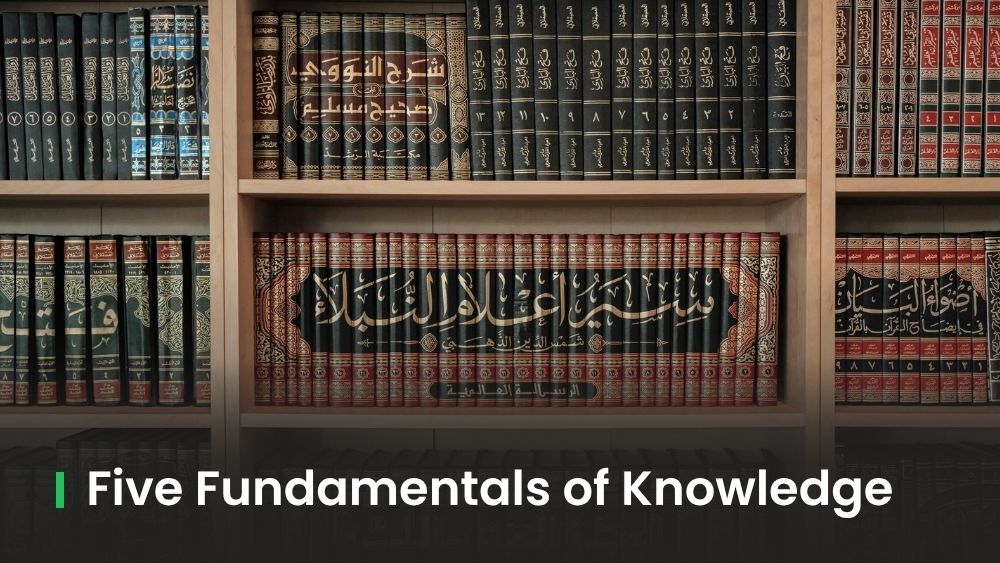
Knowledge is one of the greatest blessings Allah gives a believer. It guides worship, strengthens faith, and helps us navigate the challenges of life with clarity and confidence.
Yet Islamic knowledge is vast. With so many subjects to study, it can be difficult to know where to begin. While not every Muslim needs to become a scholar, every Muslim benefits from building a strong foundation.
Five core disciplines form that foundation: the Qur’an, Hadith, Arabic language, Islamic history, and fiqh. Together, they provide the understanding needed to learn, practise, and pass on Islam correctly.
Why Islamic Knowledge Is a Mission, Not Just a Duty
Allah says in the Quran:
وَمَا كَانَ الْمُؤْمِنُونَ لِيَنفِرُوا كَافَّةً فَلَوْلَا نَفَرَ مِن كُلِّ فِرْقَةٍ مِّنْهُمْ طَائِفَةٌ لِّيَتَفَقَّهُوا فِي الدِّينِ وَلِيُنذِرُوا قَوْمَهُمْ إِذَا رَجَعُوا إِلَيْهِمْ لَعَلَّهُمْ يَحْذَرُونَ
“So why does not a party from every group go forth so that they may acquire deep understanding of the religion, and so that they may warn their people when they return to them, so that they may beware?” [Surah At-Tawbah 9:122]
This verse is not addressed to scholars only. It is addressed to the Ummah. It carries within it an expectation: that from every community, some will go deep, learn, and then return to serve the people around them with what they have learned.
The Prophet ﷺ said: “Seeking knowledge is an obligation upon every Muslim.” [Sunan Ibn Majah]
That word ‘obligation’ is not a gentle suggestion. It is a directive. Knowledge of this deen is not a personal hobby. It is a responsibility, mission.
The more we learn and share, the more the benefit spreads. Knowledge passed on to others can continue bringing reward long after we are gone.
Want to set and track your mission and goals? Use Sadiq app!
What Are the Five Fundamentals of Islamic Knowledge?
1. Quran: The Foundation of Everything
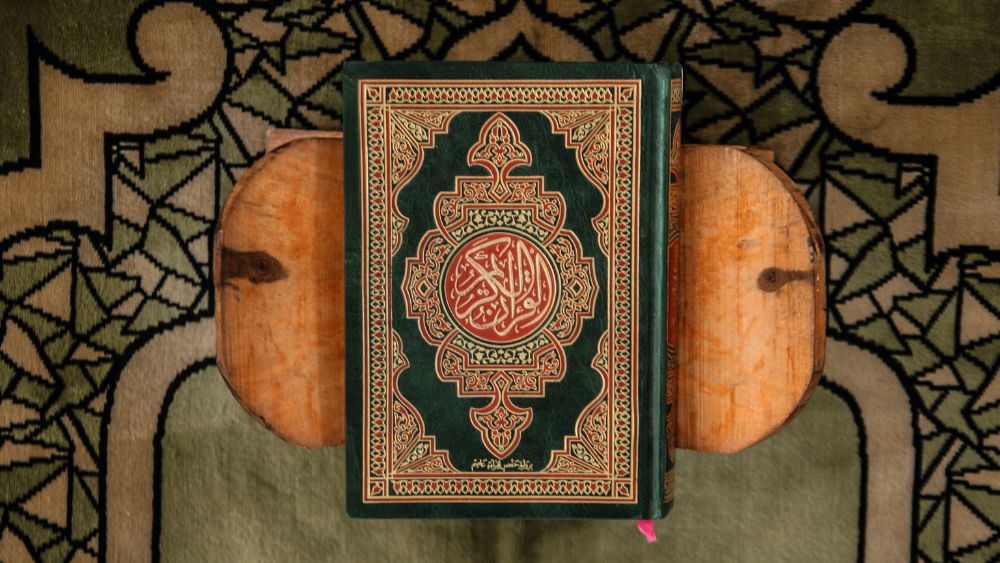
Every building begins with its foundation. In Islamic knowledge, that foundation is the Quran.
The Qur’an is not only meant to be recited. It is meant to be understood, reflected upon, and acted upon. Allah asks:
The word tadabbur appears in the Quran itself. It means to reflect deeply, to ponder, to turn something over in your mind until it yields its meaning.
Allah asks us directly:
أَفَلَا يَتَدَبَّرُونَ ٱلۡقُرۡءَانَ أَمۡ عَلَىٰ قُلُوبٍ أَقۡفَالُهَآ
“Then do they not reflect upon the Qur’ān, or are there locks upon [their] hearts?” [Surah Muhammad 47:24]
That question is a challenge. It implies that reflection is both possible and expected.
Reciting the Qur’an is a great act of worship and brings immense reward. At the same time, the Qur’an was revealed to guide, teach, and transform our lives. That is why Muslims should strive not only to recite it regularly but also to understand its message.
Reading the Qur’an without understanding still carries reward, but understanding its meanings helps us reflect on Allah’s words, strengthen our faith, and apply His guidance in our daily lives.
A practical way to begin is by reading a reliable translation, learning common Qur’anic vocabulary, and taking one lesson from your daily recitation. Over time, your connection with the Qur’an will grow deeper.
You can start your Quran understanding journey with our Al Quran app.
2. Hadith: The Living Explanation of the Quran
If the Quran is the message, the hadith is the explanation. The Prophet ﷺ did not only deliver the Quran. He lived it.
Aisha (RA), when asked about his character, said simply: “His ﷺ character was the Quran.” [Sahih Muslim]
He showed us how to pray, how to trade, how to grieve, how to forgive, how to lead, and how to follow. Without the Sunnah, the Quran remains partially unexplained. For this reason, hadith is an essential part of Islamic knowledge.
The idea of “just follow the Qur’an” overlooks this reality. The Qur’an commands prayer, but the Sunnah explains how. It sets obligations, but Hadith clarifies their details.
To preserve these teachings, scholars developed the science of isnad, carefully verifying chains of narration back to the Prophet ﷺ. This became one of the most rigorous preservation methods in intellectual history.
If you’re not a scholar, you should start with an easy to understand hadith book. Start with accessible collections like Forty Hadith of Imam Nawawi and Riyadh as-Saliheen, using reliable translations and trusted scholars or authentic hadith apps.
3. Arabic Language: The Key That Unlocks Everything
The Qur’an, Hadith, and classical Islamic sciences were all preserved in Arabic.
While translations are valuable, they cannot fully capture every meaning of the original text. Learning Arabic allows a Muslim to engage more directly with the sources of Islam.
You do not need to become fluent overnight. Even learning common Qur’anic words can transform your experience of recitation and prayer.
When the words you recite begin to carry meaning in your heart, worship takes on a new depth.
Start with Qur’anic Arabic and gradually build your vocabulary. Use reliable apps, structured courses, and consistent daily practice. With patience and effort, learning Arabic will become easier, inshaAllah.

4. Islamic History: Knowing Where You Come From
People who do not know their history cannot understand their present and cannot build their future.
Islamic history helps us understand where we came from and how previous generations lived their faith.
The Qur’an itself repeatedly teaches through the stories of prophets (AS) and nations. History provides lessons, context, and perspective.
Studying the Seerah of the Prophet ﷺ and the lives of the Companions (RA) helps us see Islam lived in practice. It also reminds us that the Ummah has faced many challenges throughout history and has continued to endure through faith, knowledge, and perseverance.
A good place to start is with the Prophetic Seerah and the era of the Rightly Guided Caliphs.
5. Fiqh: The Practical Roadmap of Muslim Life
Fiqh is Islamic jurisprudence, the practical application of the Qur’an and Sunnah to daily life. It answers real questions about worship, business, family, and personal conduct.
Every area of a Muslim’s life is shaped by it. Without fiqh, practice becomes guesswork, often based on confusion or opinion.
Over time, Muslim scholars developed structured schools of thought based on their study of the Qur’an and Sunnah. Their differences come from sincere efforts to understand and apply the sources in different contexts.
Today, fiqh helps us make sense of differing opinions and follow guidance from qualified scholarship rather than personal preference. It provides clarity and structure in practice.
A good starting point is to learn the basics of purification, prayer, fasting, and zakat through trusted scholars and reliable resources.
How the Five Work Together: Not in Isolation
These five disciplines are not separate subjects. They support one another.
The Qur’an provides the foundation. Hadith explains it. Arabic helps us understand it directly. History gives context. Fiqh turns knowledge into action.
Together, they form a complete framework for learning and living Islam.
Every great scholar in history mastered all five. Abu Hanifa (RA), Al-Bukhari (RA), Al-Tabari (RA), Al-Ghazali (RA), Ibn Taymiyyah (RA), Ibn Kathir (RA), their greatness did not come from genius alone. It came from decades of integrated, disciplined study across all five disciplines simultaneously.
This path is not a quick process but a lifelong journey. Understanding grows over time, and the five fundamentals serve as a direction rather than a destination.
A Word to the Mission-Driven Muslim
This knowledge is not for the shelf. The Ummah needs Muslims who learn, practise, and share beneficial knowledge with others. Every lesson learned and passed on has the potential to benefit future generations.
This is why building a strong foundation matters. It prepares us not only to strengthen our own faith but also to serve our families, communities, and the wider Ummah.
Start small. Learn one verse, one hadith, one Arabic word, or one ruling. Consistency matters more than speed.
And let this dua remain on your lips:
رَبِّ زِدْنِي عِلْمًا
“O my Lord, increase me in knowledge.” [Surah Ta-Ha, 20:114]
One Important Note
We always encourage seeking Islamic knowledge, whether Qur’an, Hadith, Fiqh, or other related fields through proper guidance from qualified scholars and in a structured, disciplined way. This helps ensure correct understanding and protects a person from misunderstanding or misinterpretation.
Conclusion
Five disciplines. One foundation. The Qur’an provides guidance. Hadith explains it. Arabic opens its meanings. History gives context. Fiqh shows how to live it.
No one masters them overnight. But every Muslim can begin building upon them, one step at a time.
Save this article and share it with someone who is beginning their journey in Islamic knowledge.
Explore our Islamic apps as helpful tools to support your learning journey.
Leave a Reply